
experiential storytelling
Environmental Defense Fund: Making invisible methane emissions visible
The mission
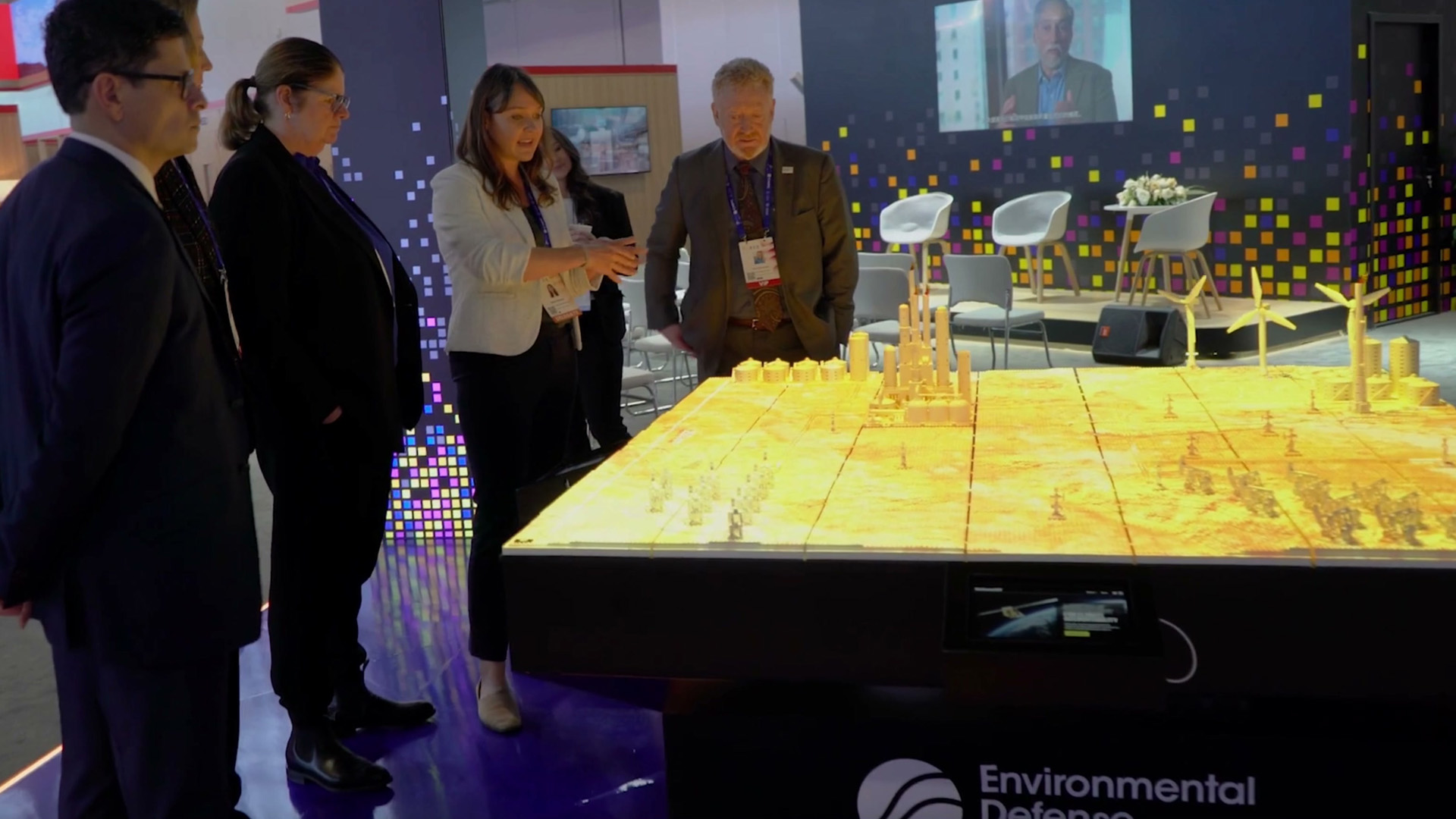
Methane is invisible, making emissions difficult to see and understand. The Environmental Defense Fund turned to Fair Worlds to find a memorable way to help attendees at the World Gas Conference understand how MethaneSAT used satellite observations to reveal emissions across oil and gas operations.
Fair Worlds chose LEGO® as the physical foundation for an interactive experience. The familiar material created immediate curiosity, while projected data, light, animation, and presenter-controlled interactions transformed the landscape into a tool for conversation and explanation.
Project details
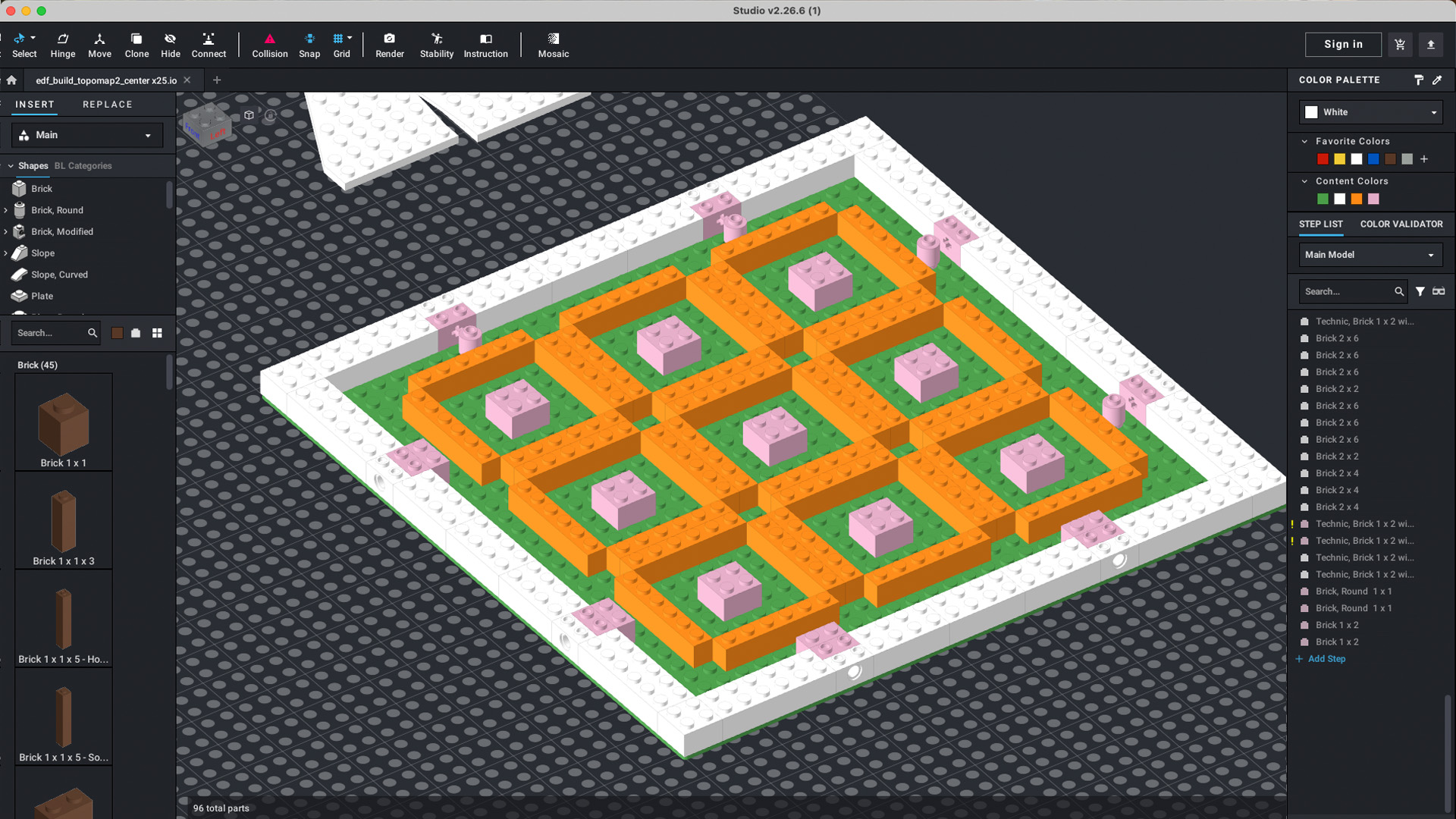
Fair Worlds' Erik Horn developed the experiential concept and connected with Bruce Heller of Cornerstone Brick Designs for specialized LEGO design and build expertise. Erik and Bruce developed the physical approach between Los Angeles, California, and Bainbridge Island, Washington, with Bruce creating the initial model in BrickLink Studio, an application for designing LEGO models digitally, testing key construction ideas, and sourcing parts for the full build.
Bruce then came to Bainbridge Island to lead the physical build, bringing in veteran model maker and LEGO builder Carlyle Livingston II and me, drawing on my own experience designing and building large-scale LEGO projects.
The project also connected directly to my professional background in interactive production, events, and trade-show environments. I understood the model not simply as an object, but as part of a larger booth experience designed to attract attention, create curiosity, and open a conversation. That perspective shaped conversations with Erik about ways the physical landscape might work with light, projection, and interaction as Fair Worlds developed the final experience.
Project at a glance
- Interactive experiential installation
- Large-scale LEGO environment
- Projection-mapped storytelling
- Modular construction
- International installation
My contributions
- LEGO design and build
- Digital-to-physical model translation
- Build, packing, and assembly planning
- Light and projection thinking
- Event, trade show, and experiential perspective
A deeper dive
After Erik and Bruce developed the concept and digital foundation, physical production began on Bainbridge Island. The landscape had to preserve the underlying geography, support detailed industrial facilities, break into transportable sections, survive international shipping, and come back together quickly in Beijing.
Working alongside Bruce, Erik, and Carlyle, the build became an exercise in translation: from digital geometry to mapped terrain, from sketches to LEGO, and ultimately from a physical model into the foundation for Fair Worlds' interactive storytelling.
Starting with the digital model
Bruce developed the initial layout in BrickLink Studio, establishing the geography, scale, industrial facilities, and relationships between major elements. That digital model became the reference for determining how the much larger physical landscape could be divided and constructed as modular sections.
Mapping the terrain
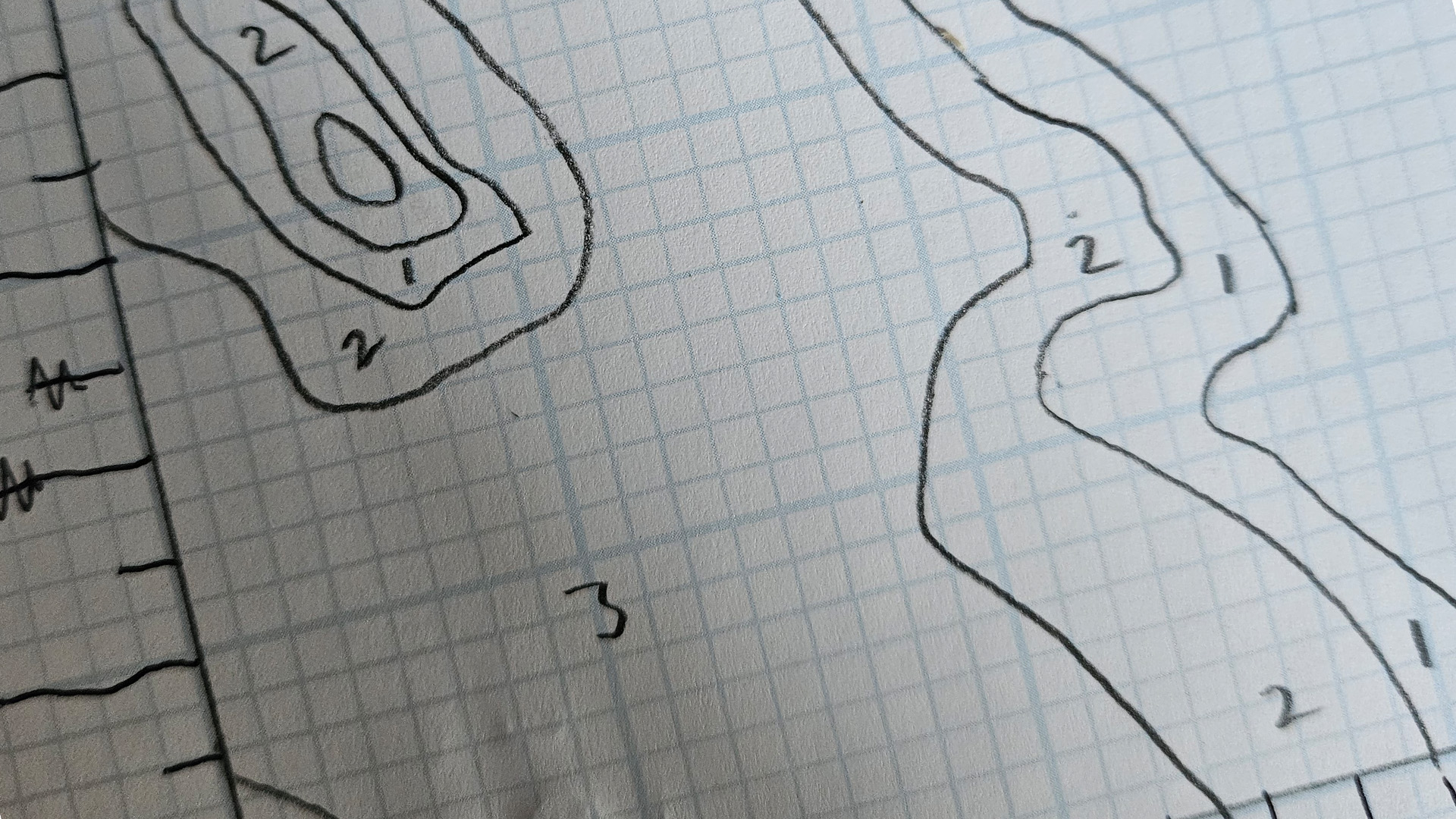
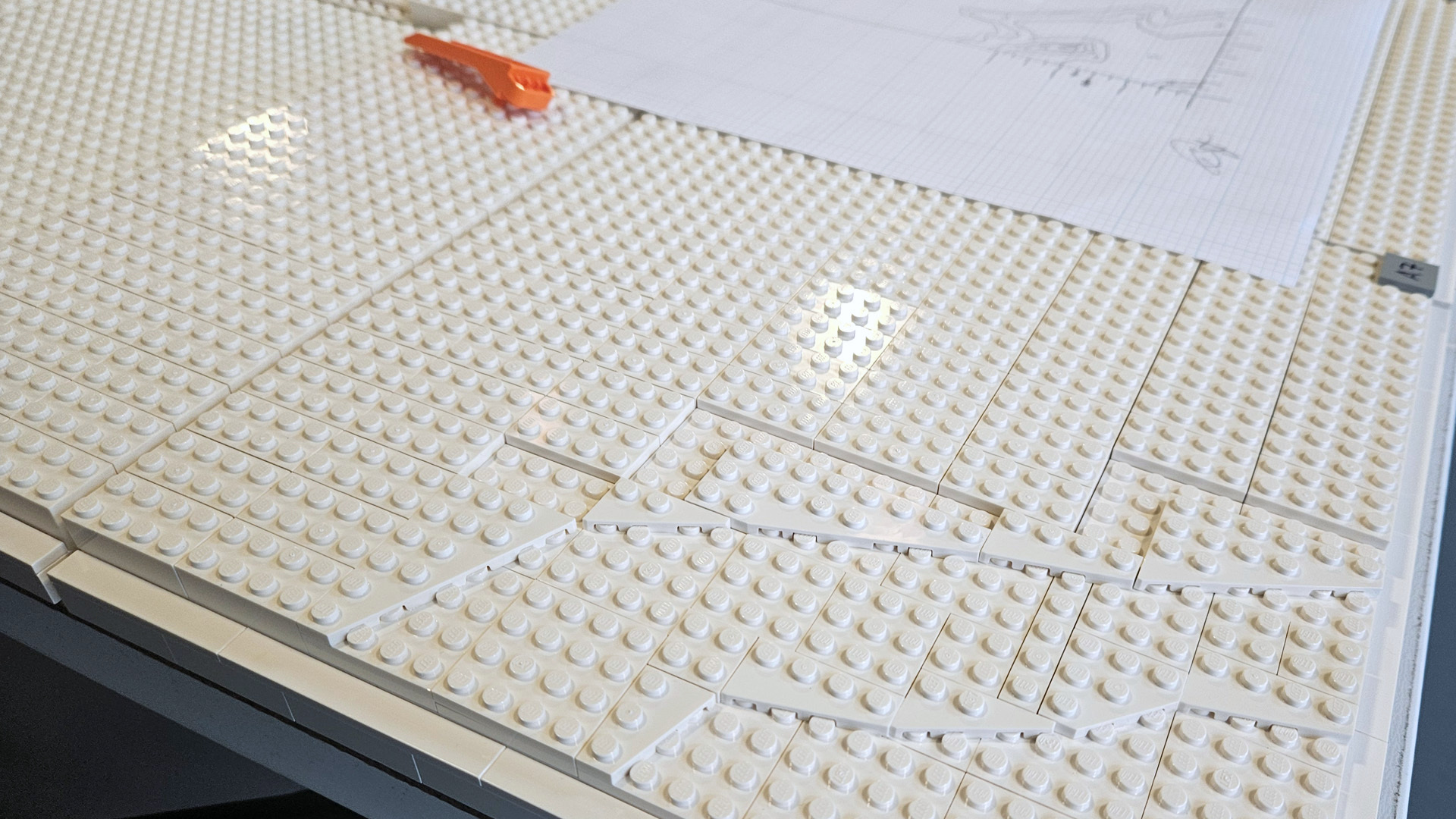
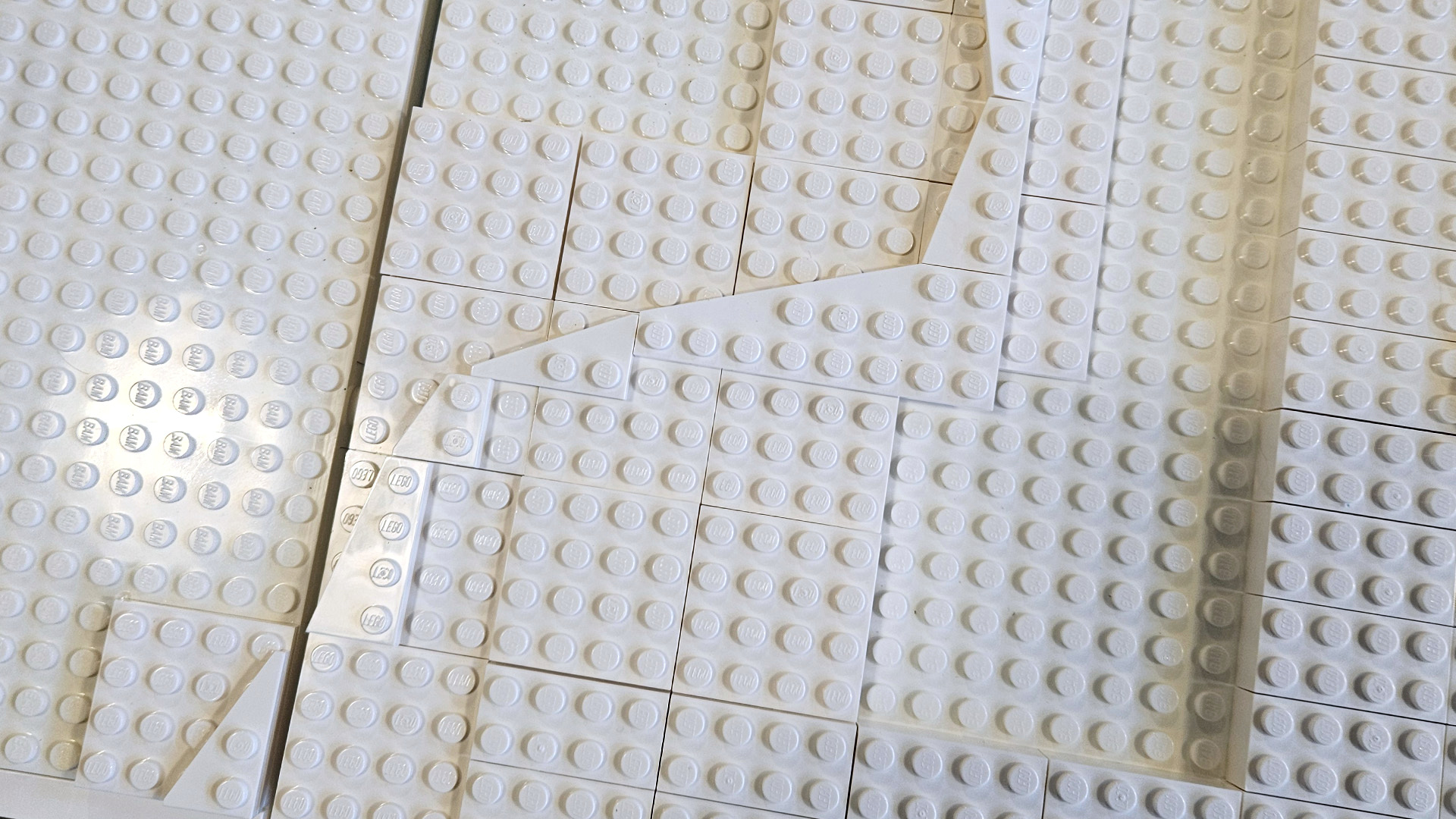
Complex organic terrain does not naturally conform to a rectangular building system. Erik and Bruce had intentionally established a regular grid so the physical landscape could work with the interactive experience. Hand-drawn maps helped translate elevation changes and irregular contours from the digital environment into buildable LEGO geometry while preserving that underlying structure.
From lines to landscape
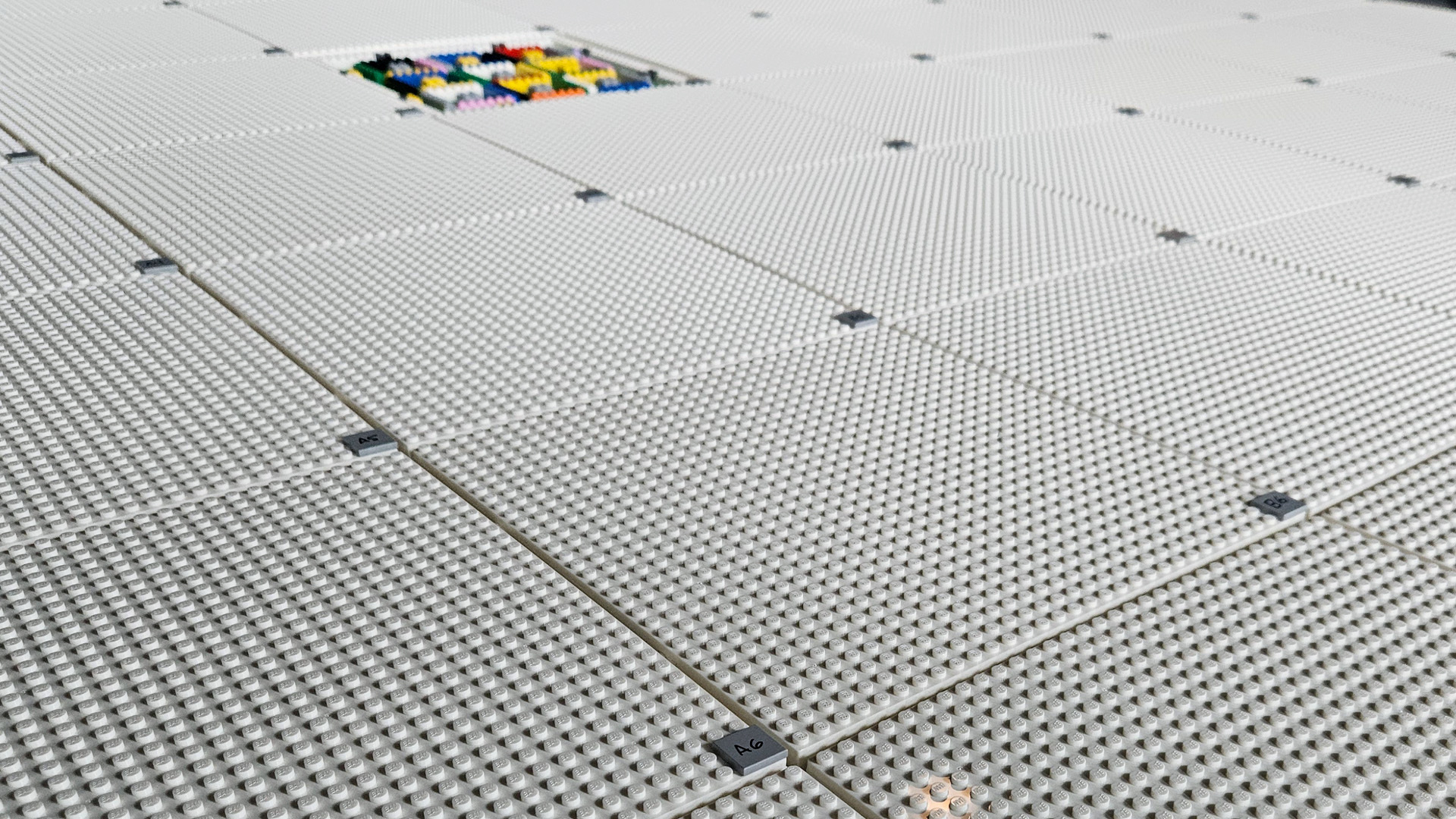
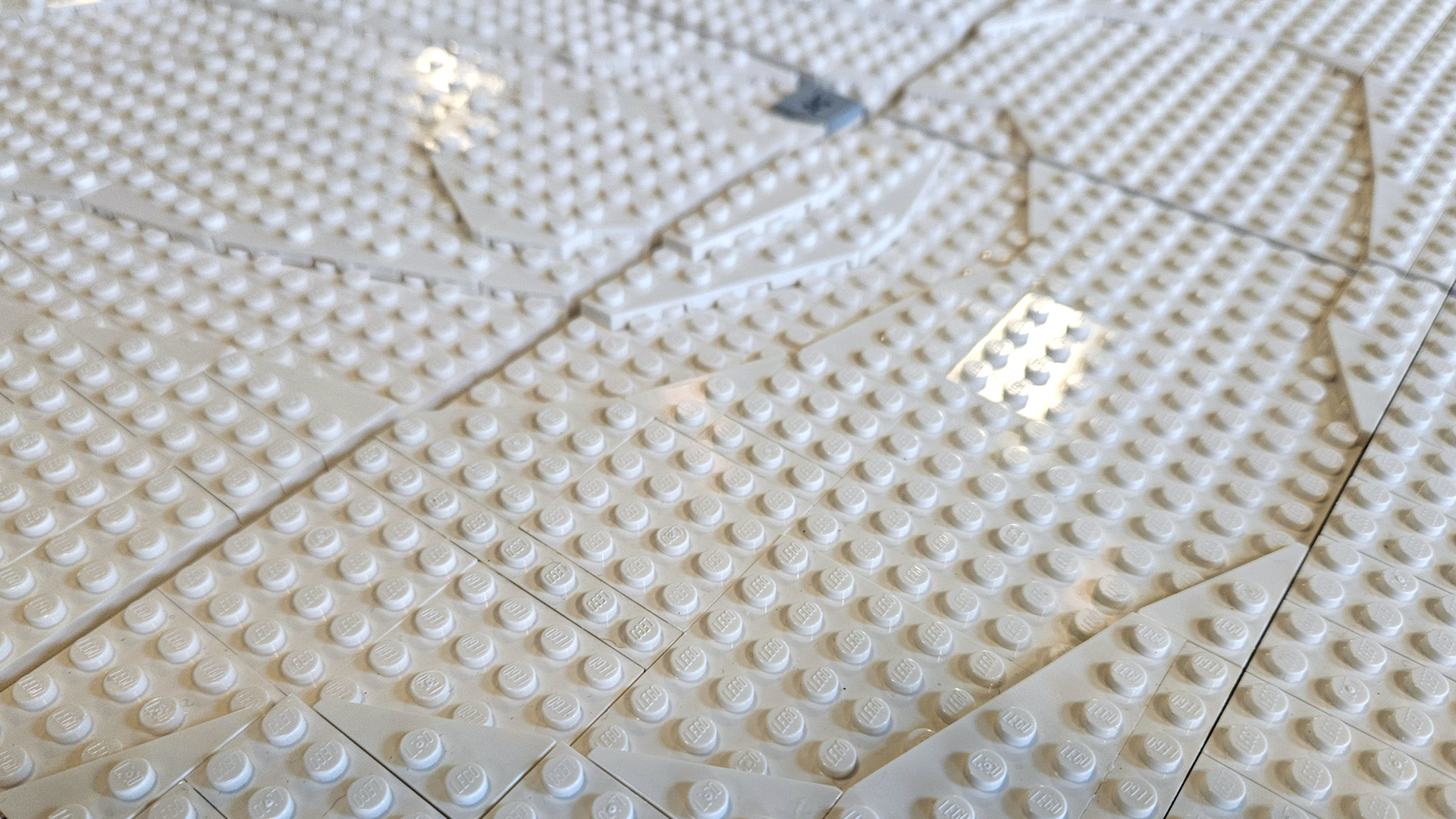
The mapped contours were transferred to the physical build one section at a time. Plates established boundaries and elevations before the terrain was filled and refined. Technic connections and spacers maintained consistent separation between sections, allowing the landscape to read as one continuous environment while preserving the underlying structure required by the experience.
Building the environment
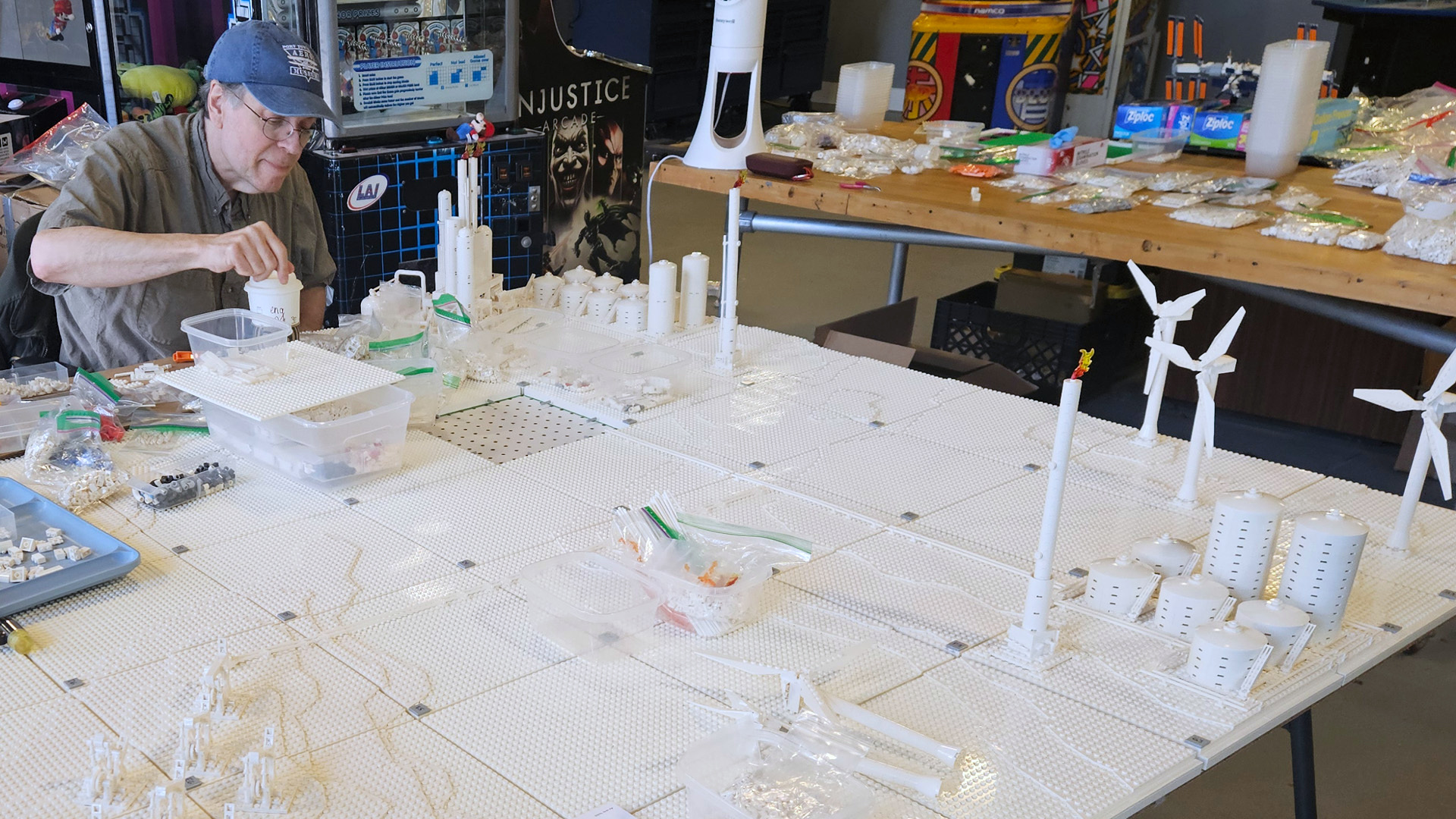
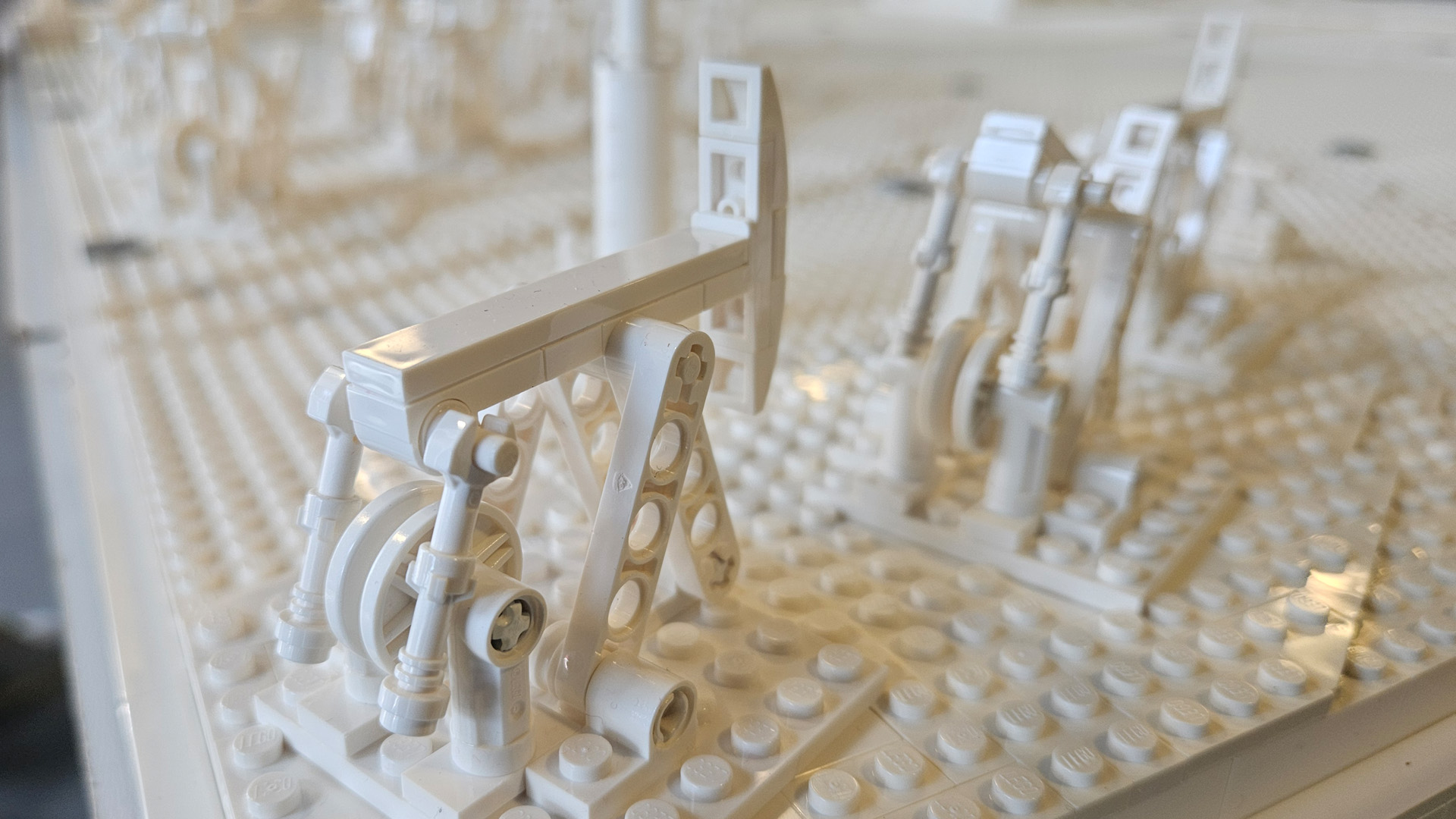
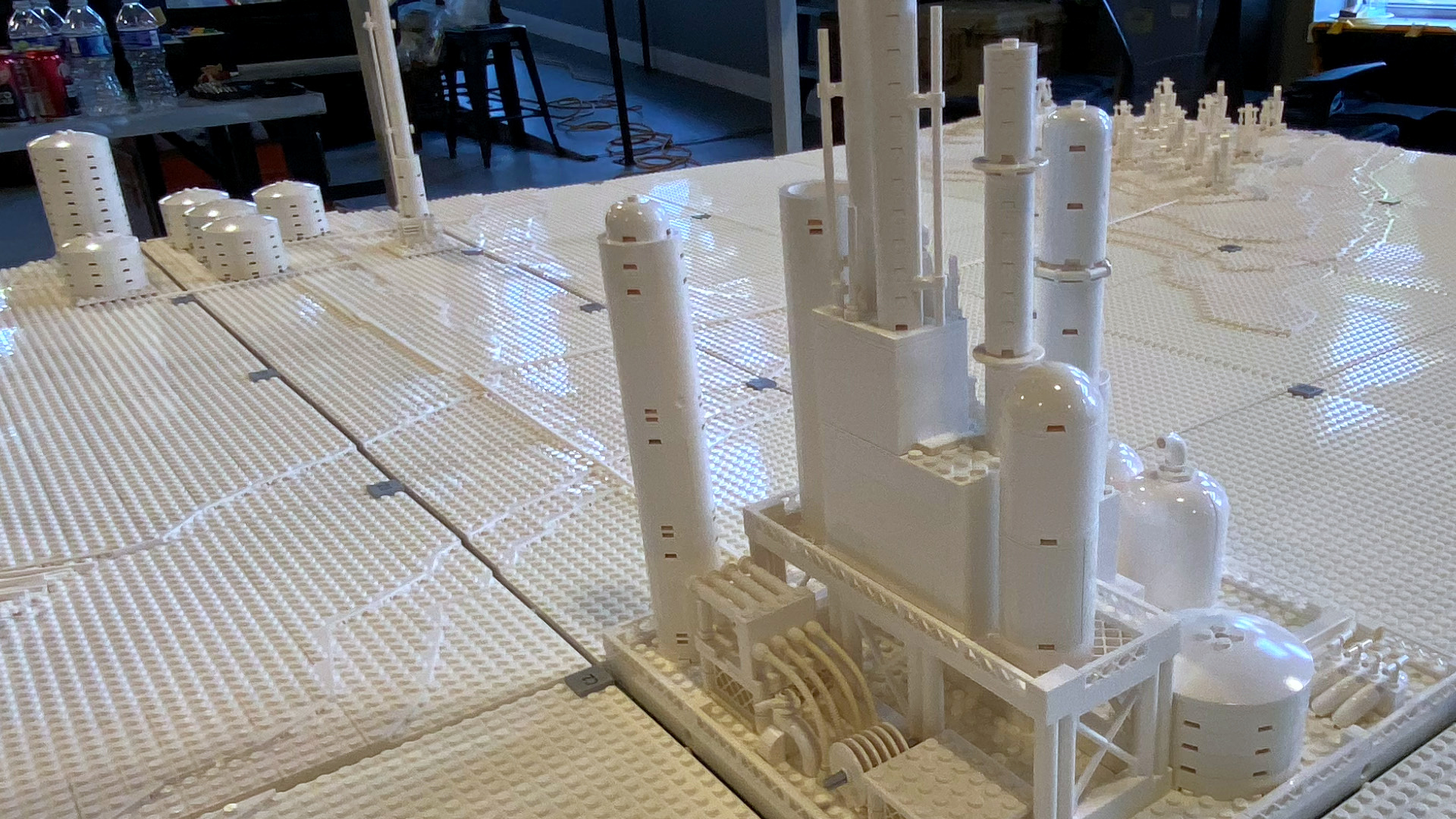
As the terrain developed, industrial facilities, roads, pipelines, and other structures were integrated into the landscape. Each component needed to work visually at model scale while maintaining the larger relationships established by the original design.
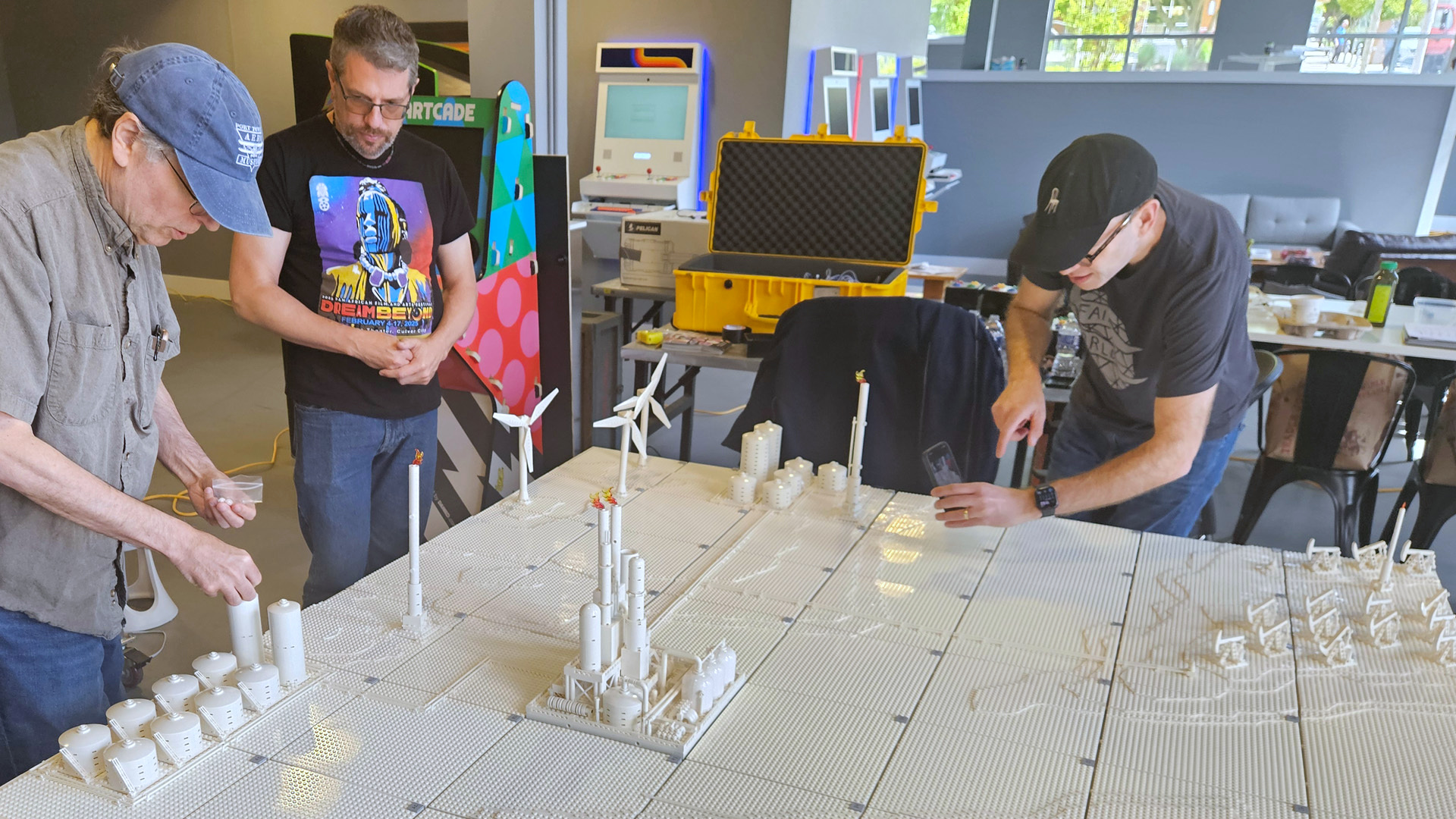
Bruce, Erik, Carlyle, and I worked around the model together, developing terrain, facilities, and structural sections in parallel. A major parts order came down to the wire, requiring us to pivot, solve around what was available, and keep the project moving toward its shipping deadline.
Designed to travel
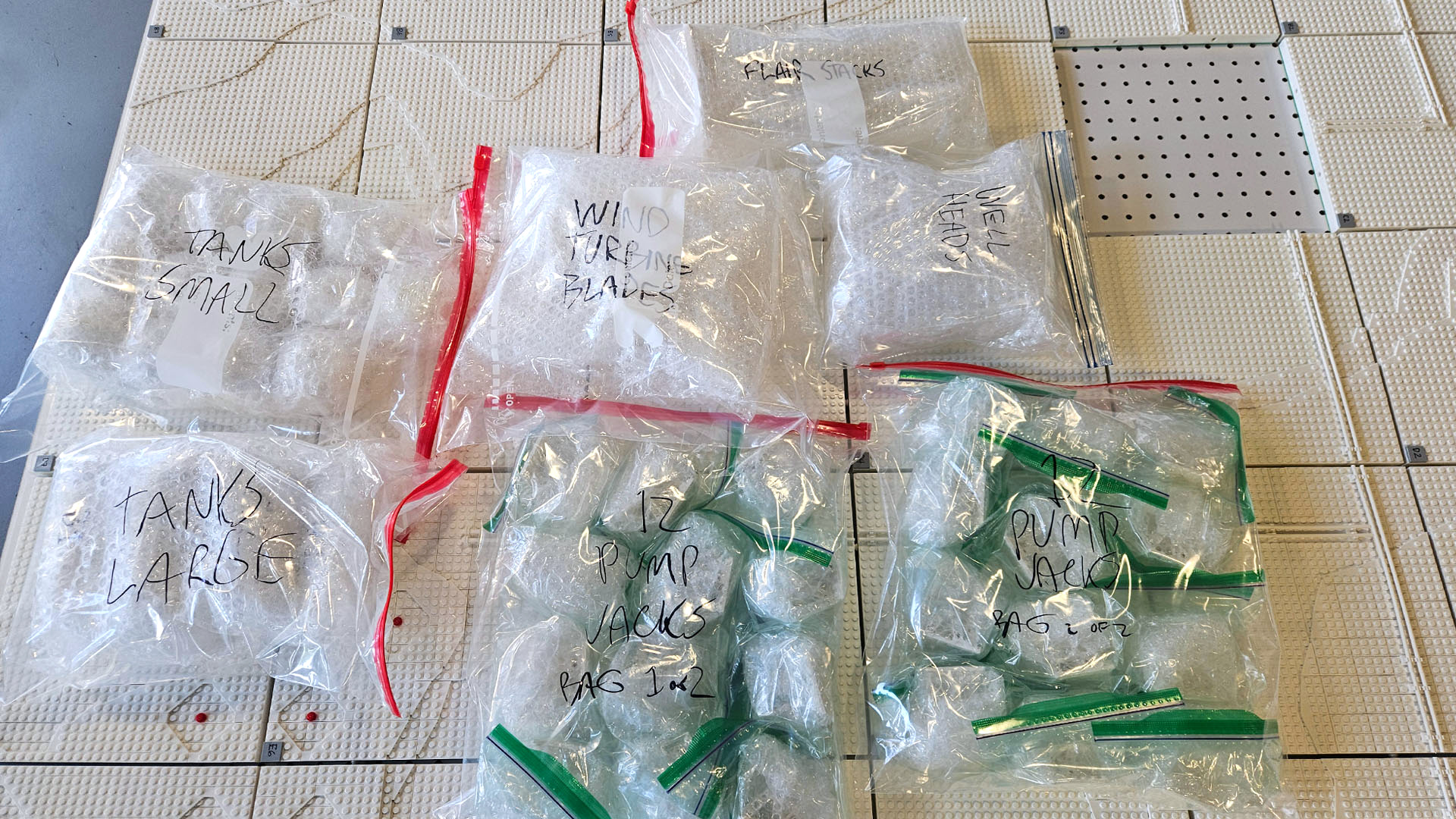
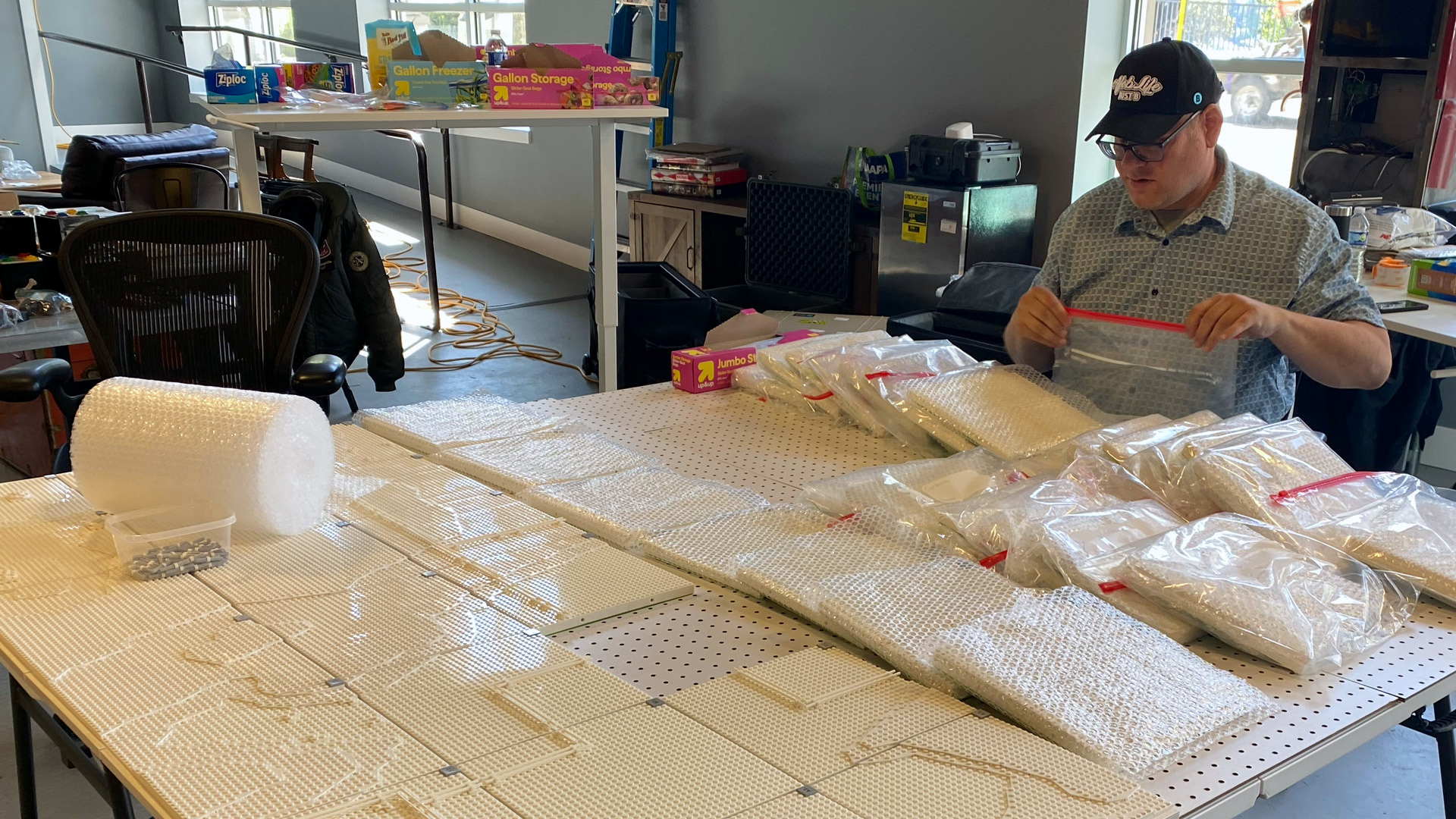
Bruce, Carlyle, and I all brought experience transporting large LEGO builds, so packing was treated as part of the design problem. Modules were separated, cushioned, wrapped, and labeled as self-contained units. If something shifted or came apart in transit, loose pieces would remain with the correct section rather than scatter through a shipping case.
That planning reduced uncertainty at the other end of the trip. The model could arrive in Beijing as a known system of sections, ready to be reassembled and aligned for Fair Worlds' projection and interactive layers.
From physical model to storytelling platform
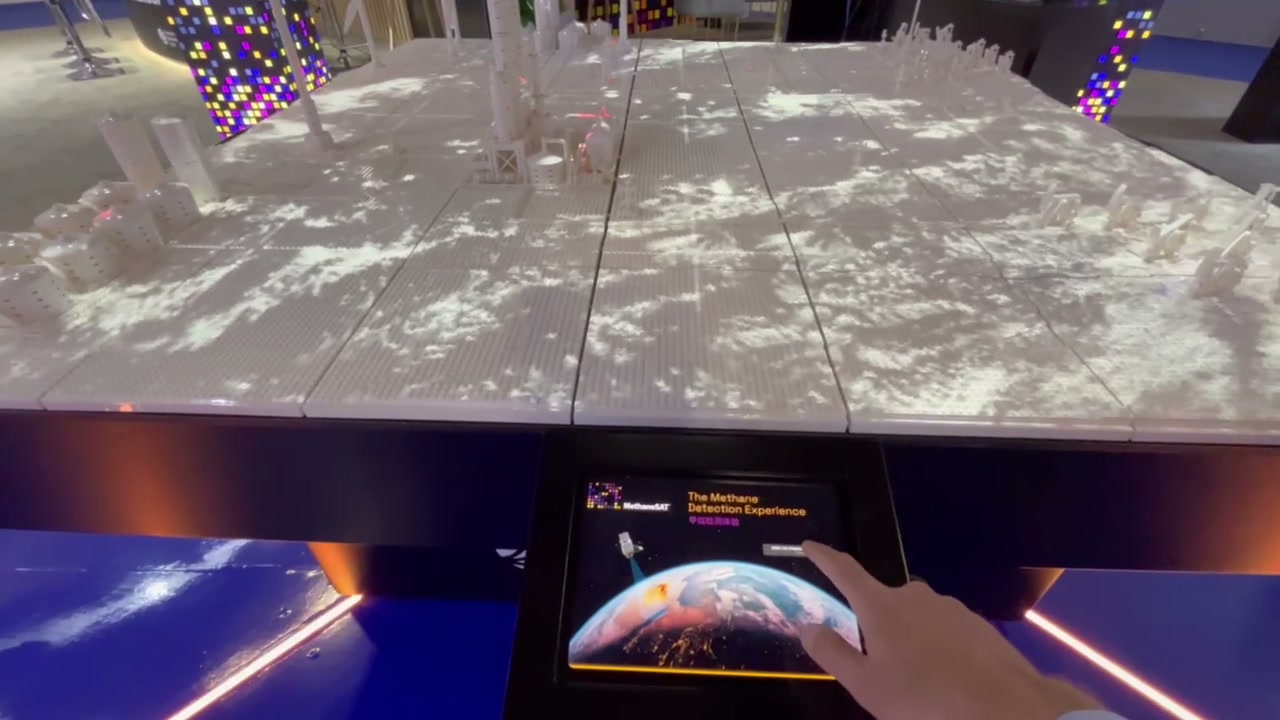
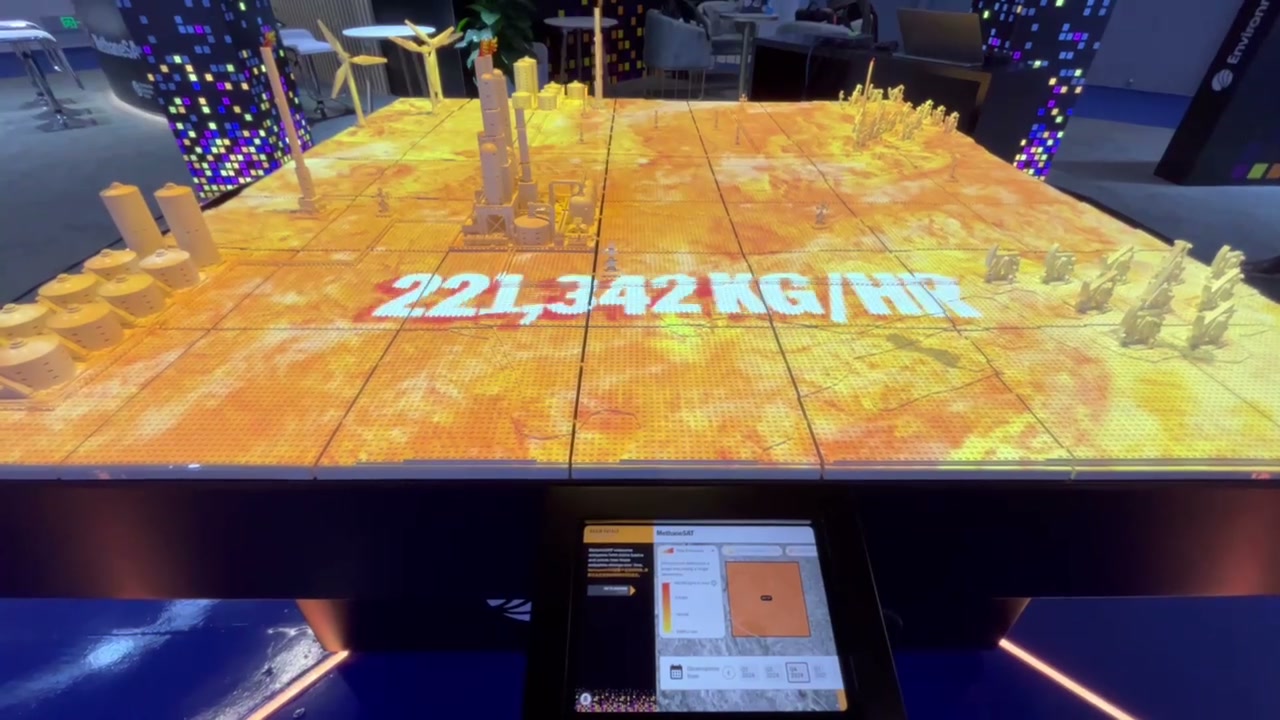
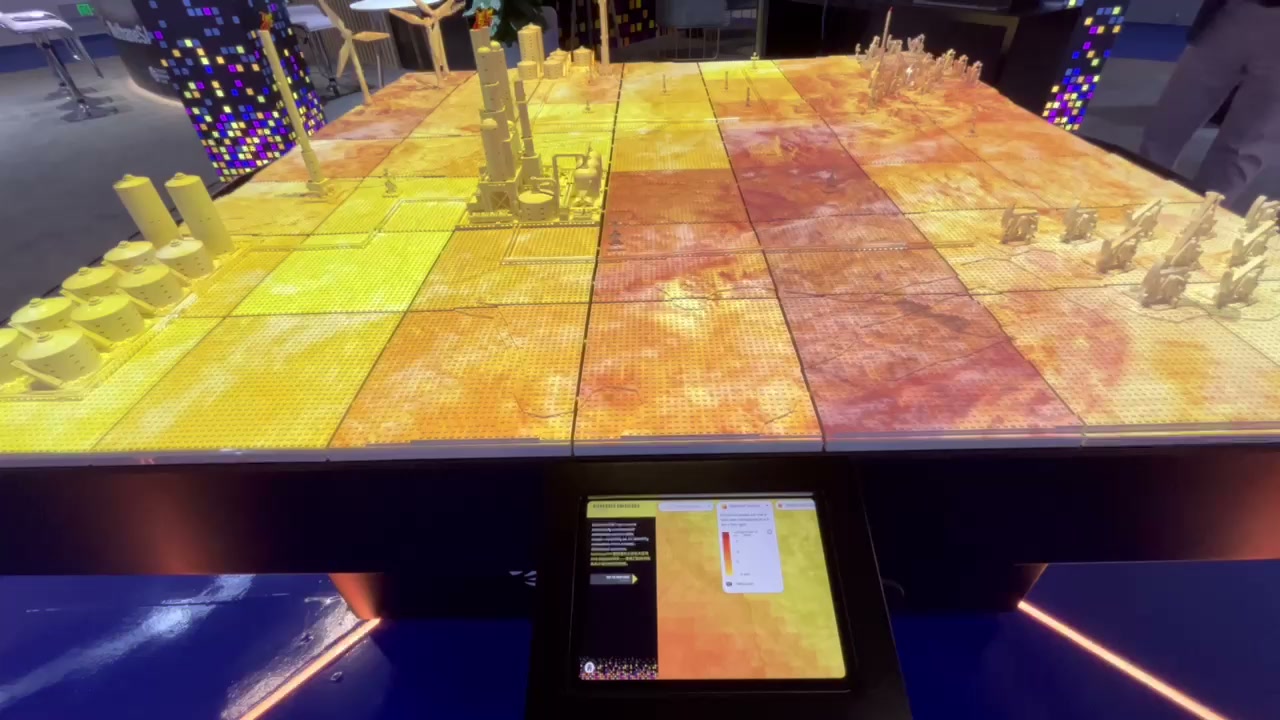
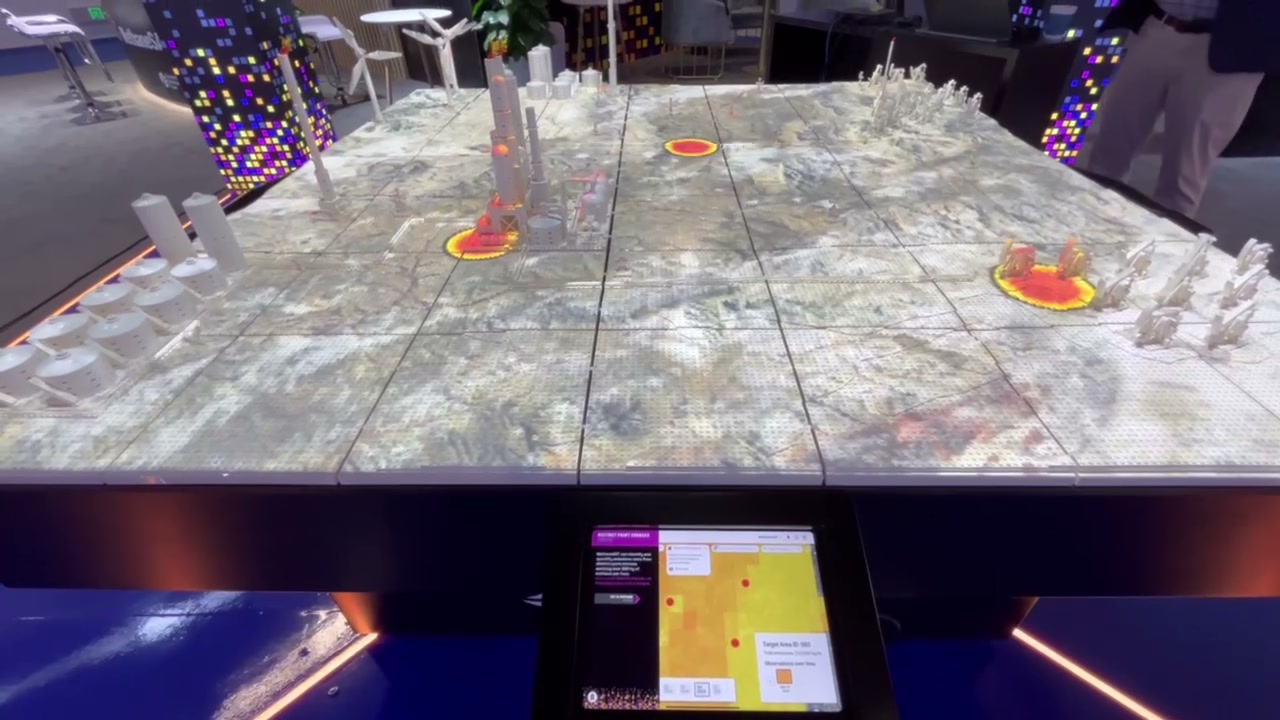
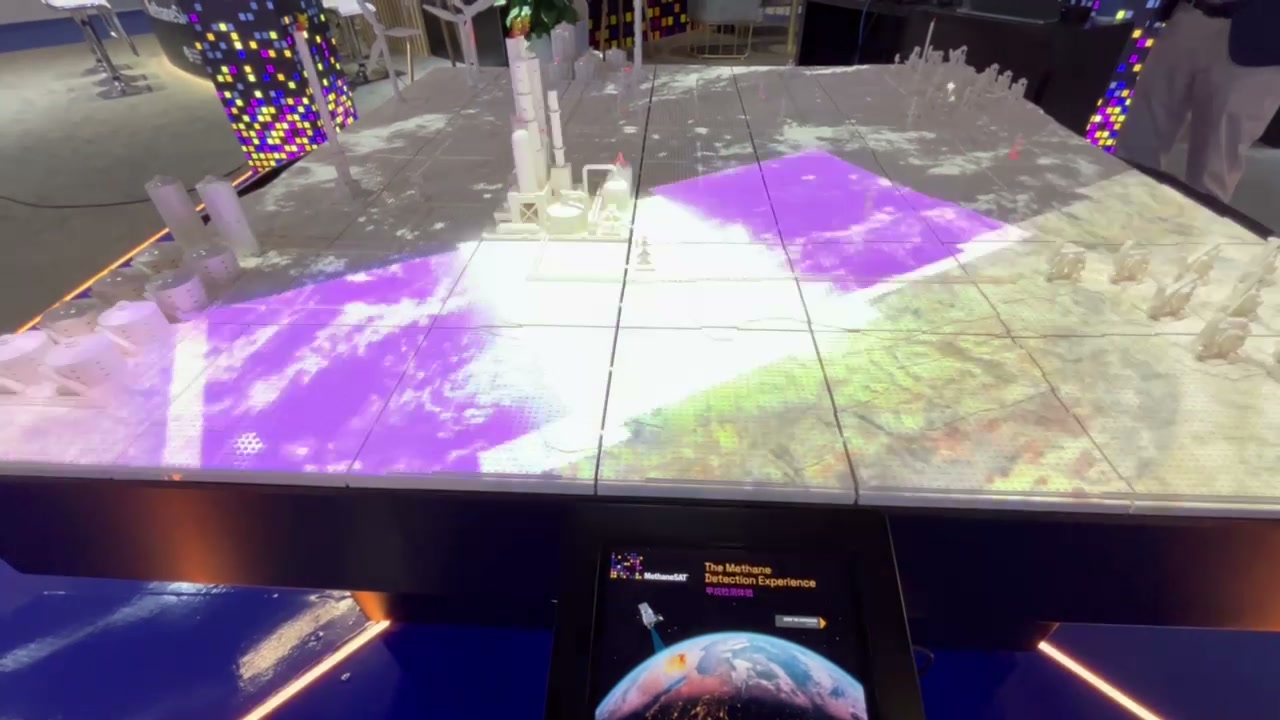
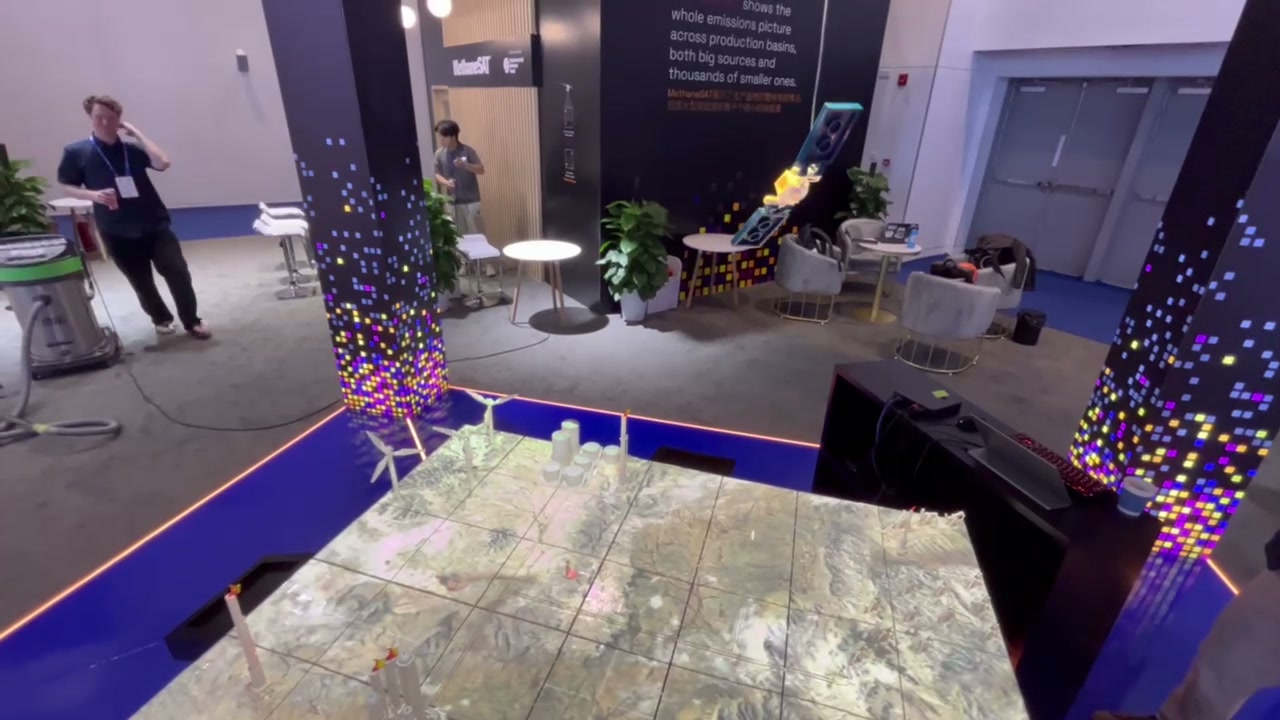
In Beijing, Fair Worlds turned the completed landscape into an interactive presentation environment. A presenter could move through different visual states while mapped projection changed across the terrain, highlighting regions, infrastructure, quantitative information, and animated activity across the model.
Making the invisible tangible
At WGC 2025, the installation gave EDF and MethaneSAT a distinctive way to begin a conversation with an international audience of energy leaders, policymakers, researchers, and industry experts. LEGO provided the initial point of recognition and curiosity; the experience then used the physical landscape to give the science scale, place, and context.
The model was never the story itself. It was the invitation into it: a familiar material transformed into a platform for helping people explore complex information, ask questions, and better understand what satellite observations can reveal.
In memory of Carlyle Livingston II
Carlyle Livingston was a talented builder, collaborator, and friend who played an important role in bringing this project to life. He passed away in July 2026. His talent, experience, kindness, and genuine humanity left a lasting mark on this work, as they did on the people and work he touched throughout his life and career.
You may like
United Airlines: Updating customers faster with care

